A Three-Shot Story: Why a Small Boundary Helps
A three-shot story helps you shape a clear beginning, change, and ending with a phone or other device, without adding gear or overplanning.
The usual mistake with a first video idea is trying to fit the whole story into the first take. A three-shot story gives the idea a boundary: show a beginning, let something change, then show the result. That small limit can spare you from gathering extra gear or filming every thought that crosses your mind.
Three connected shots are not three random clips with the same subject. Each shot needs a job, and the next one should make sense because of what came before. Think of them like three stepping stones across a stream: each is small, but their order gets the viewer to the other side.
Start with one visible change
Choose a simple change the camera can show. A paper airplane is on a table, then it is folded, then it glides across the room. A mug sits beside an empty notebook, then a hand writes in it, then the notebook is closed with a fresh line on the page.
These ideas work because the change is visible, not because they need elaborate backstory. If your idea depends on a character explaining what they feel, consider whether an action, object, or altered arrangement could carry the same meaning. A short story can hint at a larger feeling without spelling out every reason behind it.
Fix a beginning that feels like a setup
A common snag is that the first shot shows a location but gives the viewer no reason to look closely. A wide view of a bedroom, for instance, may establish where the story happens while leaving its central question hidden. The cause is often a first shot chosen for atmosphere before the story’s subject is clear.
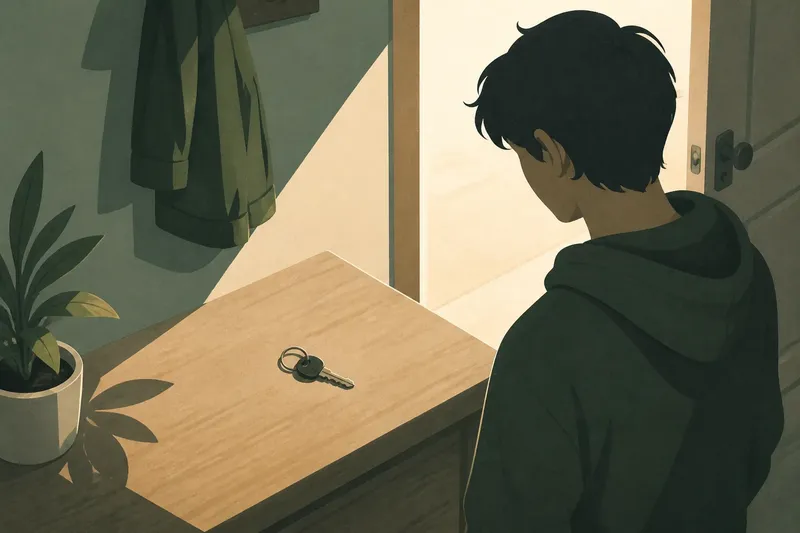
Try framing the first shot around the object or action that will matter later. You might show a drawing with one corner still blank, a plant leaning toward a window, or a key resting just outside a closed box. Include enough surroundings to orient the viewer, but let the important detail remain easy to notice.
If you want a quieter opening, make the stillness purposeful. A hand hovering above a folded note creates anticipation; a bare view of a desk may not. The opening does not need to explain the whole idea, but it should give the next shot something to develop.
Make the middle change legible
The second shot often causes trouble because it repeats the first instead of moving the story forward. This can happen when the filmmaker changes the camera angle but leaves the subject and action untouched. A new view alone is not necessarily a new beat.
Give the middle shot a clear action or discovery. The blank corner gets colored in, the plant is turned toward the light, or the box opens to reveal that the key was never needed. The change can be modest; it just needs to alter what the viewer understands or expects.
Keep the connection visible. If the first shot establishes a loose button on a coat, the middle might show someone picking up a needle and thread. A cut to a distant street corner may be beautiful, but unless the story provides a link, viewers may wonder if they have started watching something else.
Give the ending a consequence
A final shot can feel abrupt when it simply stops after the middle action. The usual cause is treating the ending as a place to finish recording rather than a chance to show what the change means. A completed action is useful, but a visible consequence gives it a landing.
After the button is sewn on, show the coat hanging ready to wear. After the plant is turned, show the leaves facing the window. The consequence can be an object in a new state, a person’s small reaction, or a changed arrangement in the frame. Avoid adding a fourth clip just because you want to explain the point; see whether the final image can carry that meaning.
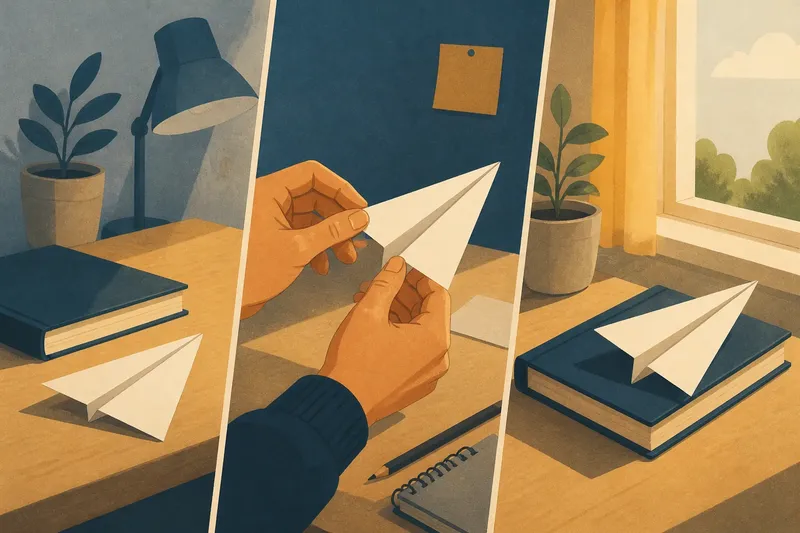
Say you want to make a story about a paper airplane that refuses to fly. In the first shot, it sits on a desk beside a closed book; in the second, a hand adjusts one bent wing; in the third, the plane rests on the book after a short glide. The book gives the action a visible destination, and the changed position supplies an ending without dialogue or special equipment.
Keep the three shots connected during filming
Continuity problems can make a simple sequence feel accidental. The paper airplane may appear in a different spot, a cup may jump across the table, or a hand may enter from the opposite side without a reason. These slips often happen when each shot is filmed as a separate little project.
Before moving the camera, notice the objects that need to stay consistent. You can leave the scene set up between clips, or use a quick phone photo to remember where a prop sits. If you intentionally change the arrangement, make the movement part of the story rather than an unexplained jump.
Also check the direction of action. If a person reaches toward the right edge in one shot, the next view should make the destination understandable. You do not need formal camera rules for a tiny story; you do need the viewer to recognize that the shots belong to one event.
Choose framing that serves the beat
It is tempting to make all three shots identical because that feels tidy. But a repeated frame can hide a meaningful change, especially when the important action is small. Conversely, switching to a dramatic new angle for every clip may distract from a simple story.
Let each frame answer a different need. The first can establish the object and its surroundings, the second can move closer to the action, and the third can show the result with enough context to understand it. A phone held steadily in two hands, or braced on a stack of books, is often sufficient for a clear image.
Keep the frame simple before recording. Move a bright wrapper or unrelated clutter if it pulls attention from the story, but do not turn tidying into a separate production task. Use a lamp or a window if the subject is hard to see, and check that the important detail remains visible on the phone screen.
What should you try when a three-shot story stalls?
What if I cannot think of a third shot?
Ask what the second shot changes, then show the result of that change. If there is no result to show, the middle action may need to be clearer or the idea may need a simpler ending.
Can the three shots use different camera angles?
Yes, if each angle helps the viewer follow the same event. Keep the subject, action, or location recognizable so the change in framing does not feel like a jump to a new story.
Does a three-shot story need dialogue?
No. An object’s position, a hand’s movement, or a reaction can communicate the change. Add spoken words only if they clarify something the images cannot show naturally.
What if one shot looks noticeably worse?
First check whether the story still reads clearly; a small difference in brightness or framing may matter less than a confusing action. If the shot hides the important detail, record that beat again while keeping the other parts of the setup consistent.
Use the boundary without making it a rule
Three shots are a useful starting constraint, not a test of discipline. If the story cannot be understood without one more clip, add it for a reason: perhaps the viewer needs to see who moved an object or where an action took place. If three already tell the story, resist adding a shot that only repeats the mood.
For a first video, a three-shot story is a way to make the idea small enough to finish and clear enough to share. Decide what the viewer sees at the beginning, what changes in the middle, and what the last image reveals. Then film those beats with whatever device is at hand, and let each shot earn its place.