Three Window Shots for a Rainy Afternoon
Three window shots for a rainy afternoon turn changing rain, reflections, and focus into a complete short visual sequence without adding props.
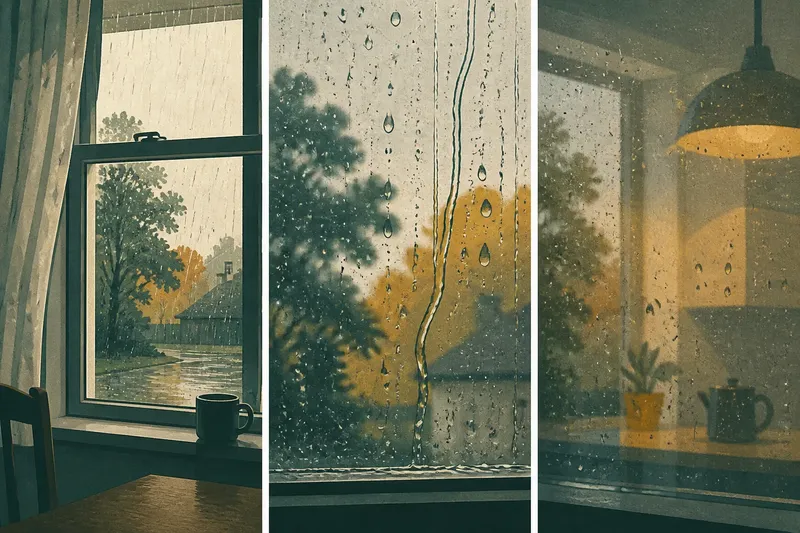
The common mistake with three window shots for a rainy afternoon is filming the same view three times and hoping the rain supplies the story. The result often feels like spare footage rather than a sequence. Give each shot a different job—establish the view, reveal a change, then end on a detail—and one ordinary window can hold a small story without a single new prop.
Use whatever camera you already have: a phone, tablet, or compact camera. Keep the scene contained to one window and the room around it. The rain is not just background; it changes what the glass reveals, from a clear view outside to a shifting mix of drops, reflections, and soft shapes.
1. Establish the view before the rain takes over
Start with a wider view that includes the window frame and a little of the room. A curtain edge, sill, or familiar corner gives the viewer a sense of where they are, while the outdoor view supplies the scene’s changing surface. Hold the camera steady against a wall or rest your elbows on a table if a tripod is not available.
Choose a composition that lets the glass and the outside world share attention. If the frame is filled only with the street or garden, the window stops feeling like part of the story. If it is crowded with the whole room, the rain may become hard to notice. Leave enough space for both.
This first shot can be quiet. Let a passing car, a branch moving in the wind, or a drop starting to trail down the pane provide a small point of motion. If nothing changes during the take, that is fine: the later shots can make the shift visible.
For a phone, tap the part of the image you want to keep clear, then avoid changing exposure during the shot. If the outside view turns too bright and the room becomes a dark silhouette, try framing a little more toward the window or moving a step closer to the glass. A small adjustment is often enough to make the two layers readable.
2. Let the second shot change what the viewer notices
For the middle shot, move closer to the glass or change your angle so that raindrops become the main subject. Keep a recognizable hint of the outside view behind them. The point is not to find a dramatic storm; it is to make the viewer notice that the same window now looks different.
Focus choices can shape that change. Tap a drop near the center of the frame to bring the glass forward, or tap the view beyond it to make the drops soften into texture. Many phone cameras will adjust focus when you tap the screen, but the control varies by device. If tapping causes the image to jump, frame the shot without touching the screen and let the camera settle.
Look for a drop that gathers and begins to move. A slow track down the pane gives the shot its own action, while a cluster of smaller drops can make a still frame feel busy. You do not need to chase every movement: choose one small event and keep the camera still long enough for the viewer to register it.
Watch for unwanted reflections. A bright lamp or your own face may appear over the view, especially when the room behind the camera is brighter than the outdoors. You can shift your position or turn off a nearby room light if that suits the scene; avoid pressing the lens or phone against the glass, which can make framing awkward and invite smudges.
3. End on a detail that changes the mood
Make the final shot a close detail: a drop joining another, a blurred leaf beyond the pane, or the faint reflection of the room appearing in the glass. This is not simply a tighter version of the middle shot. It should leave the viewer with a different feeling—calm, anticipation, or the sense that the afternoon has narrowed to this small patch of weather.
One useful choice is to let the outside view become less legible. Frame a few drops against a muted background, then hold the shot as their paths merge. The image can feel more private than the opening view, as if the room has become a place to watch from rather than a place to leave.
Another option is to end on a reflection. Shift slightly until the room appears over the rain, but keep some outdoor color or movement visible underneath. Like looking at a familiar object through a sheer curtain, the overlap can make an everyday scene feel newly noticed without adding anything to the frame.
Say you are filming from a kitchen window while rain crosses a backyard. The first shot includes the sill and a tree outside; the second focuses on a drop sliding in front of that tree; the last catches the kitchen’s dim reflection over the blurred branches. The expected result is a simple progression from place, to movement, to a more inward final image—not a plot, but a clear visual turn.
Make the three shots feel like one sequence
Consistency helps the shots belong together. Keep the window, time of day, and general camera position recognizable, then change only what the viewer is meant to notice. If you shift from a wide frame to a close detail, make the shift purposeful rather than accidental. A sudden change in brightness or orientation can distract from the rain’s movement.
Pay attention to sound while filming. Rain on a roof, a distant passing car, or the soft room tone can give the sequence a sense of place. If the sound is mostly handling noise, you can keep the shots silent and choose whether to add room tone later; the images do not need music to make the visual progression understandable.
- Keep the camera still for each shot so small movements in the rain remain visible.
- Choose one focus point at a time: the room, the glass, or the view beyond it.
- Check that the window frame or another indoor edge appears in the opening shot.
- Look for one distinct change in the middle shot, such as a drop moving or focus shifting.
- Give the final shot a new mood or visual layer rather than repeating the same composition.
- Review the clips in order and remove any take that does not add a new visual idea.
How do you adapt the shots to your window?
What if the rain is barely visible?
Use the glass as the subject even if drops are sparse. A soft reflection, a damp streak, or the movement of trees beyond the pane can carry the middle or final shot. Avoid pretending the weather is heavier than it is; the sequence can be about a change in attention rather than a storm.
What if the phone keeps focusing on the wrong layer?
Tap the intended subject once and give the camera a moment to settle. If it keeps switching between the drops and the background, simplify the frame by moving closer to the glass or choosing a darker, less busy backdrop. Some camera apps offer a focus lock; use it only if you already know where that control is on your device.
Should the camera move between shots?
A small change in position can help distinguish the three views, but keep each individual take steady. You might make the first shot wide, the second closer, and the third slightly off-center to catch a reflection. A handheld pan is usually less useful here because it can compete with the rain for attention.
How long should each clip be?
Keep a take long enough for its main change to register, then stop when the image has made its point. A drop may need a little time to travel, while a still reflection may need only a brief pause. Let what happens in the frame guide the length instead of forcing every clip to match.
Keep the prompt contained and leave room for weather
Rain does not follow a script, so the useful part of this prompt is its simple progression: establish the window, reveal what the glass is doing, and finish with a detail that shifts the mood. If the rain stops or the light changes, treat that change as material rather than a failed plan. You can make the three window shots for a rainy afternoon from one position, with the camera you already own and nothing added to the scene.
Before packing the device away, glance at the clips in sequence. If each one makes the viewer notice something different, the window has done enough work. Save the most natural sound if it supports the images, and leave the rest quiet; a small story can end on the rain without explaining what comes next.